
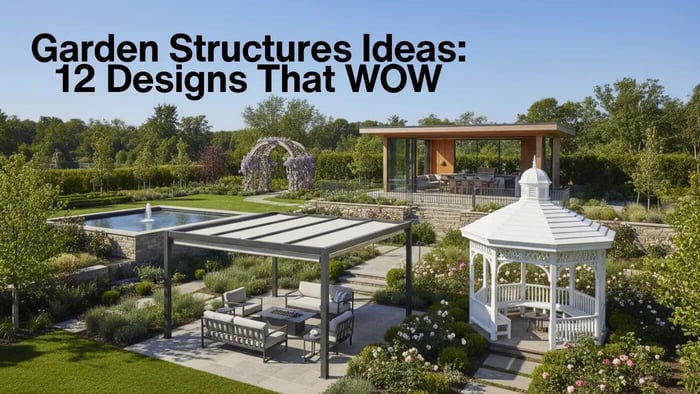

When you think about your backyard, you might first picture the lawn or the flower beds, but the true secret to a stunning outdoor space is the Garden Structure. At its core, a garden structure is any built element like a pergola, gazebo, or arbor that adds shape, shade, and purpose to your land.
These installations matter because they act as the "walls" of your outdoor room, instantly turning an empty patch of grass into a functional area for dining, relaxing, or hosting friends. Beyond just looking great, a well placed structure solves the problem of exposure to the elements and can significantly boost your property value by increasing your usable square footage.
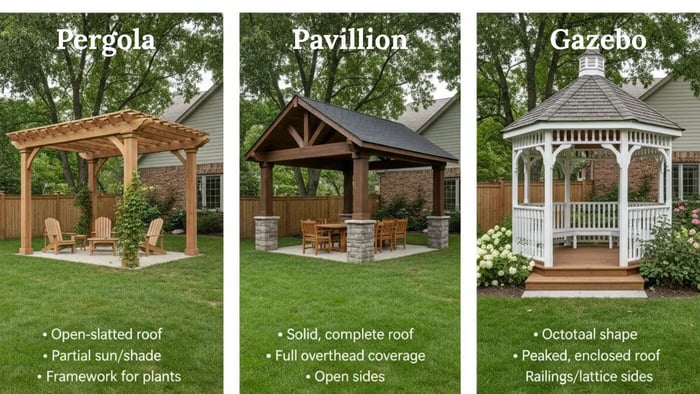
Table of Contents
- Why Every Backyard Needs a Garden Structure
- 1. The Traditional Wood Artisan Pergola
- 2. The Louvered Modern Pergola
- 3. The Privacy-Screened Sanctuary
- 4. The Classic Shingled Gazebo
- 5. The Living Willow Arbor
- 6. The Minimalist Steel Trellis
- 7. The Attached "Interior Extension"
- 8. The Cantilevered Poolside Shade
- 9. The Greenhouse Hybrid (The "Solarium")
- 10. The Bohemian Moon Gate
- 11. The Outdoor Kitchen Pod
- 12. The Sunken Fire Pit Pavilion
- Technical Planning Guide for Homeowners
- FAQs
Why Every Backyard Needs a Garden Structure
We have all been there where you step outside to enjoy a sunny afternoon but realize there is nowhere comfortable to sit and no escape from the direct heat. This is exactly where garden structures come to the rescue. Their primary purpose is to provide clear definition to your yard. Without them, a backyard can feel like an endless, disorganized green space. By adding a structure, you are creating a destination; a specific spot that draws people in and gives them a reason to stay outside longer.
Solving Real Backyard Problems
If you are looking at your backyard and wondering why it doesn't feel like those "wow" photos you see online, the missing ingredient is likely a permanent architectural element often called a garden structure. These structures solve several common headaches for homeowners:
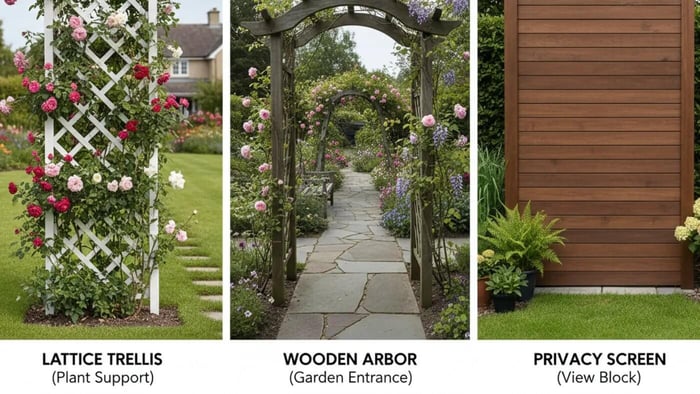
Lack of Privacy: Structures like pergolas with privacy screens or tall trellises create a secluded sanctuary away from the eyes of neighbors.
Climate Control: They offer much-needed shade and shelter, allowing you to use your backyard during a light rain or a scorching July afternoon.
Vertical Interest: If your yard feels "flat," structures allow you to grow climbing plants upwards, adding layers of greenery and texture.
This guide is designed to help you understand exactly how these designs can work for you. Whether you want a high end entertaining hub often found in the most expensive homes in the US or a quiet corner to read, the following 12 garden structure ideas will give you the actionable inspiration you need to transform your home into a year round sanctuary.
1. The Traditional Wood Artisan Pergola
Best for: Timeless Craftsmanship & Natural Aesthetics
For homeowners seeking an organic, "Amish-made" look, the traditional wood pergola remains an industry favorite. High quality options, such as the YardCraft 10x12 Wood Pergola, provide a professional architectural finish that mimics a custom built project at a fraction of the cost.
The Wow Factor: Features like "Half Moon Braces" and laminated Southern Yellow Pine provide a sturdy, high end architectural profile.
Standard Footprint: 10' x12'. Fits perfectly over a standard 6-person dining set.
Pros: Highly customizable (comes unstained); DIY-friendly assembly (6–8 hours); adds immediate property value.
Cons: Requires staining every 2–3 years to maintain wood health; fixed slats provide "dappled" shade rather than 100% rain protection.
Yard Craft 10x12 Wood Pergola DIY Kit

$2,399.00
Introducing YardCraft's beautiful pine wood pergola kit! This DIY-friendly kit make it easy to create the outdoor oasis you've always wanted – without breaking the bank or your back. Tired of a cramped patio and scorching summer sun? Introducing YardCraft's… read more
2. The Louvered Modern Pergola
Best for: Total Climate Control, 365 Day Versatility & Technical Control
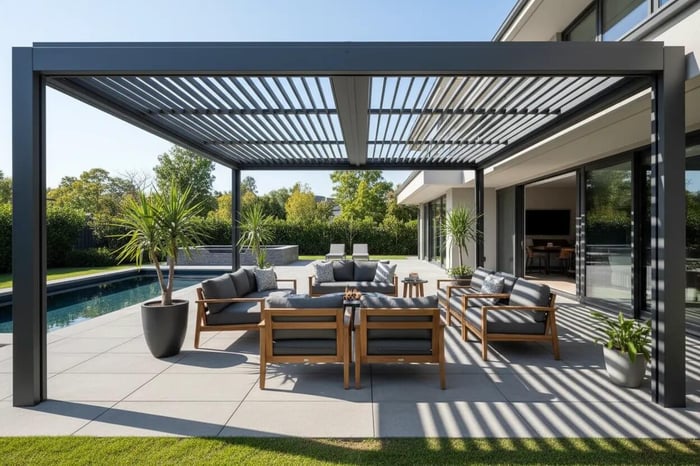
A modern marvel of outdoor engineering, usually constructed from high grade, powder coated aluminum. The "louvers" (roof slats) can be rotated to transition from 100% sunlight to a fully sealed, weather tight roof.
General Specifications: * Materials: Look for aerospace-grade 6063-T5 aluminum for structural integrity.
Drainage: Integrated hidden gutter systems within the support posts are standard in high-end models.
Pros: 100% waterproof when closed; virtually zero maintenance; high wind resistance.
Cons: Higher initial investment; sleek lines may require careful landscaping to match rustic homes.
3. The Privacy-Screened Sanctuary
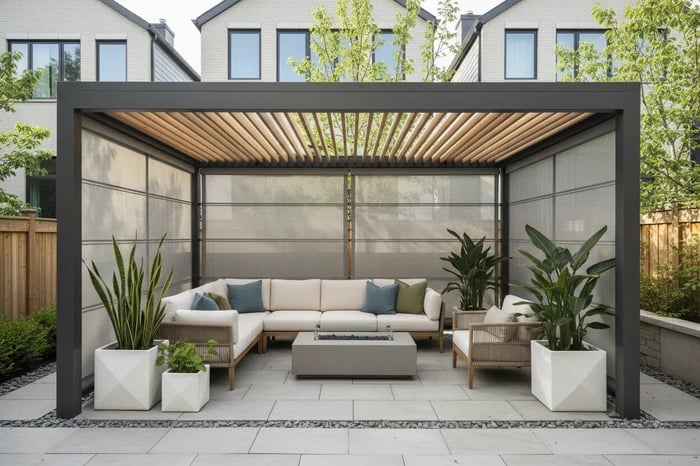
Best for: Urban Dwellers & Close Neighbours
This design integrates a fixed or retractable screen into the pergola frame. It solves the "Lack of Privacy" issue while maintaining airflow and aesthetic appeal.
General Specifications: * Screens: Can be made of laser-cut aluminum, cedar slats, or weather-resistant mesh.
Pros: Blocks the line of sight from neighbors; acts as a secondary windbreak.
Cons: Screens can limit your own view of the rest of the garden; fixed screens may require extra permits in some zones.
Standard Footprint: 8' x 10' or 10' x 10'.
Expert Tip: Orient the screen toward the setting sun to double its use as a glare-blocker.
4. The Classic Shingled Gazebo
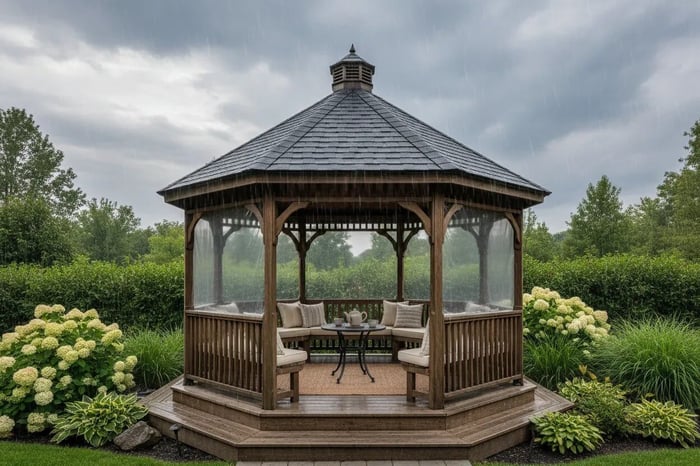
Best for: All-Weather Protection & Traditional Charm
The gazebo is a standalone "room" with a solid, pitched roof. It is the most robust solution for homeowners who want a permanent sanctuary regardless of the forecast.
General Specifications: * Shape: Octagonal, Oval, or Rectangular.
Foundation: Requires a level concrete pad or reinforced decking.
Pros: 100% shade; can be screened or glass-enclosed; high resistance to heavy snow loads.
Cons: Large physical and visual footprint; more complex installation than a standard pergola.
Fifthroom Treated Pine Single Roof Octagon Gazebo

$4,199.00
Discover the perfect blend of classic elegance and personalized style with Fifthroom's Treated Pine Single Roof Octagon Gazebo. Available in 13 sizes ranging from 6 to 30 feet. These gazebos offer a stunning foundation for your outdoor oasis. Crafted from durable… read more
5. The Living Willow Arbor
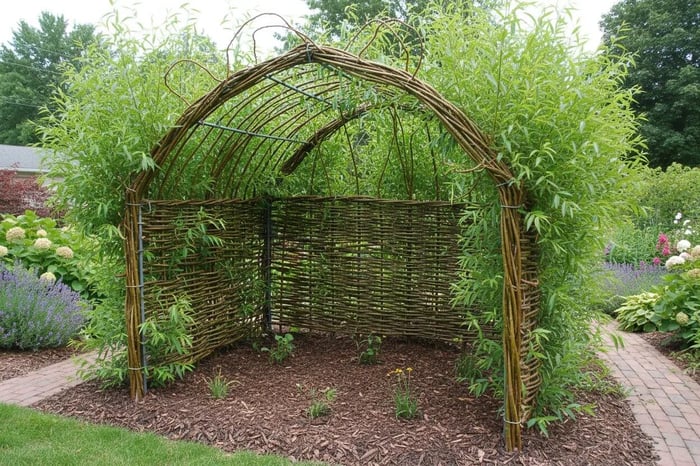
Best for: Eco-Conscious & Whimsical Gardens
Constructed by weaving live willow branches or training vines over a metal frame. This structure grows with your garden, providing a "soft" architectural element.
General Specifications: * Growth Time: Typically takes 2–4 seasons to fully "fill in."
Pros: Low material cost; increases biodiversity; provides natural cooling through transpiration.
Cons: Requires high maintenance (annual pruning); dormant in winter (no privacy during cold months).
6. The Minimalist Steel Trellis
Best for: Modern Urban Patios
A slim profile structure designed to take up minimal ground space while maximizing "Vertical Interest." Perfect for climbing plants like Clematis or Star Jasmine.
General Specifications: * Materials: Powder coated steel or heavy duty wrought iron.
Pros: Ideal for small square footage; extremely durable; easy to install.
Cons: Steel can become very hot in direct sun, which may stress delicate plant species.
7. The Attached "Interior Extension"
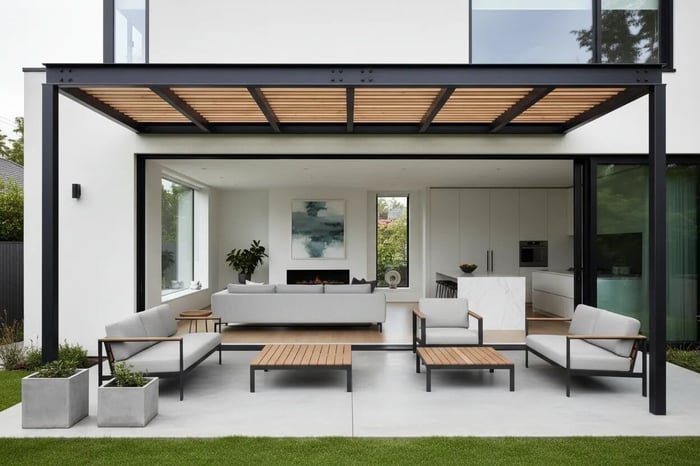
Best for: Creating Seamless Indoor-Outdoor Flow
By bolting a pergola directly to the house facade, you effectively extend your living room or kitchen into the fresh air.
General Specifications: * Installation: Requires professional mounting to the home's ledger board.
Pros: Maximizes existing patio space; creates a unified architectural look with the home.
Cons: Requires strict adherence to local building codes regarding home attachments.
8. The Cantilevered Poolside Shade
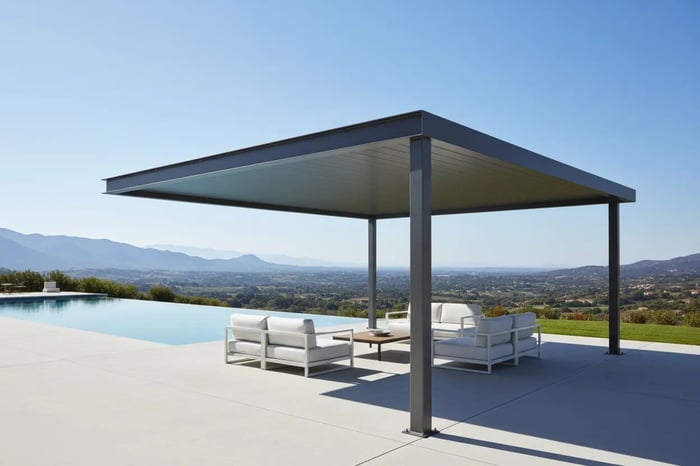
Best for: Modern Luxury & Unobstructed Views
Featuring a support system on only one side, the roof "floats" over the area, providing shade without the "forest of posts" usually found in traditional designs.
General Specifications: * Footing: Requires a heavy-duty, often weighted or bolted, foundation.
Pros: Perfect for poolside safety (no tripping hazards); sleek, high-end aesthetic.
Cons: Susceptible to high winds if not properly engineered.
9. The Greenhouse Hybrid (The "Solarium")
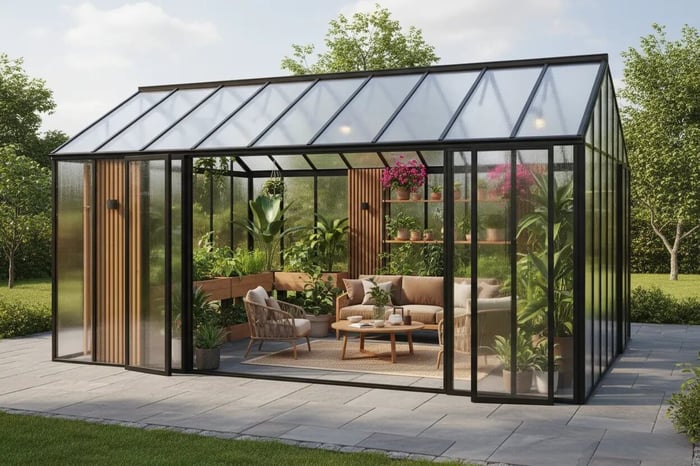
Best for: The Year Round Hobbyist Gardener
A structure that combines the open feel of a garden room with the glass or polycarbonate protection of a greenhouse.
General Specifications: * Glazing: UV-protected polycarbonate or tempered safety glass.
Pros: Extends the growing season; provides a warm lounge during winter months.
Cons: Can become excessively hot in summer without proper ventilation/shading.
10. The Bohemian Moon Gate
Best for: Visual Storytelling & Landscape "Flow"
A circular structure, often stone or wood, that acts as a portal between two distinct garden "zones."
General Specifications: * Diameter: Usually 7' - 9' to allow for comfortable passage.
Pros: Incredible focal point; symbolic "entryway" to a private sanctuary.
Cons: Mostly decorative; provides minimal shade or rain protection.
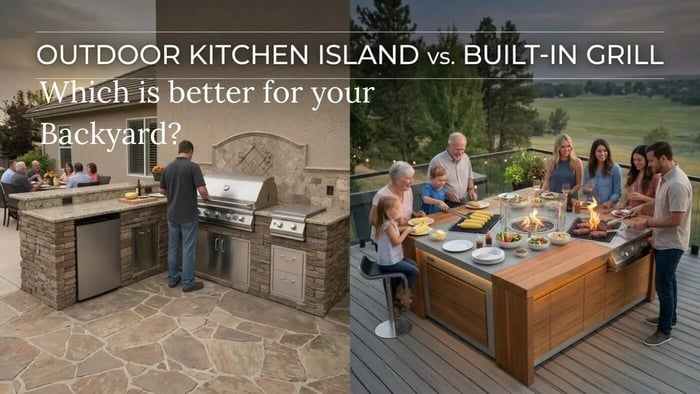
11. The Outdoor Kitchen Pod
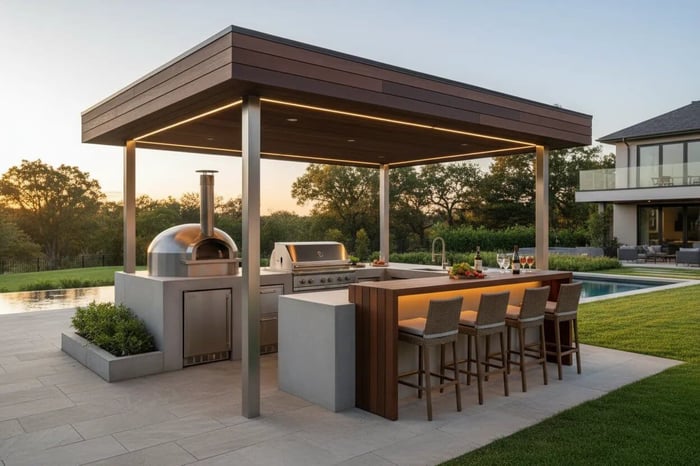
Best for: The Gourmet Entertainer
A specialized pavilion designed specifically to house high end grills, outdoor pizza ovens, and refrigeration.
General Specifications: * Materials: Must be non-combustible (stone, metal, or fire-rated wood).
Pros: Protects expensive appliances; defines a professional cooking workspace.
Cons: Requires utility integration (gas, water, electric).
12. The Sunken Fire Pit Pavilion
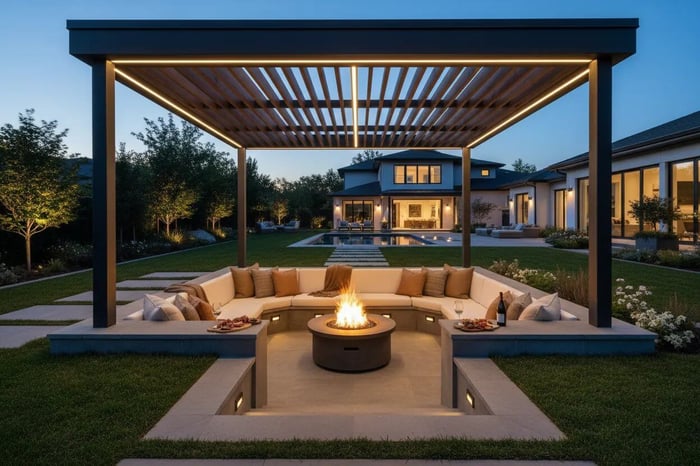
Best for: Cozy Night Time Socializing
A pavilion built over a slightly excavated seating area. This change in elevation creates a "den" feeling that is highly popular in luxury real estate.
General Specifications: * Drainage: Requires an integrated drain system in the sunken area to prevent flooding.
Pros: Ultimate "wow" factor; protects the fire from wind for a more consistent flame.
Cons: Highest cost of installation due to excavation and drainage requirements. Furthermore, because this design involves a roofed structure, many homeowners wonder, is it safe to have a fire pit under a gazebo? Proper ventilation and ceiling height are critical factors to consider before breaking ground.
Technical Planning Guide for Homeowners
| Structure Type | Maintenance | Best For | Permit Likely? |
| Wood Pergola | Medium | Traditional Architects | Yes (over 120 sq ft) |
| Aluminium Louvered | Low | Modern/Climate Control | Yes (If attached) |
| Steel Trellis | Low | Small Spaces/ Vertically | No |
| Shingled Gazebo | Medium | All weather use | Yes |
A Note on Technical Accuracy: Specifications such as wind speed ratings, snow load capacity, and drainage efficiency vary significantly by manufacturer. For instance, a premium 6063-T5 aluminum unit will outperform a standard retail kit in coastal or high-altitude environments. Always consult with a local contractor or structural engineer to ensure your structure meets the specific safety codes for your region.
FAQs
Do I need a building permit for a garden structure?
In most jurisdictions, a permit is required if the structure exceeds a specific square footage (commonly 120 square feet) or if it is permanently attached to your home’s primary structure. Additionally, if you plan to install electrical lighting or gas lines for a fire pit, separate trade permits are usually mandatory. Always check your local zoning laws and HOA (Homeowners Association) guidelines before beginning installation.
What is the best material for a low maintenance pergola?
Powder coated aluminum is the industry leader for low maintenance. Unlike wood, which requires staining and sealing every 2–3 years to prevent rot and "checking," aluminum is rust-proof and only requires an occasional rinse with water. For those who prefer a wood look without the upkeep, high-quality vinyl or wood plastic composites (WPC) are excellent alternatives.
Can a louvered pergola really handle heavy snow?
Yes, but with one major caveat: the louvers should generally be left in the open position during heavy snowstorms. While premium aluminum systems are engineered to handle significant weight (often 20-30lbs/sq ft), leaving the slats open allows snow to fall through, preventing a "solid roof" effect that could lead to structural strain. Always check the specific "Snow Load" rating provided by the manufacturer.
How much does a garden structure increase property value?
Real estate experts suggest that well-integrated outdoor living spaces can see a Return on Investment (ROI) of 50% to 80%. By adding a permanent structure like a gazebo or a craftsman pergola, you are increasing the "usable square footage" of the home. This "outdoor room" appeal is a significant selling point in luxury real estate markets, as it expands the home's footprint without the cost of a full room addition.
What is the ideal height for a backyard pergola?
The standard height for most garden structures is 8 to 10 feet. A height of 8 feet feels cozy and intimate for dining areas, while 10 feet is often preferred if you are installing a ceiling fan, hanging heaters, or integrating the structure with a high roofline on the main house. You want enough clearance to feel open, but not so much that the structure loses its ability to provide effective shade.